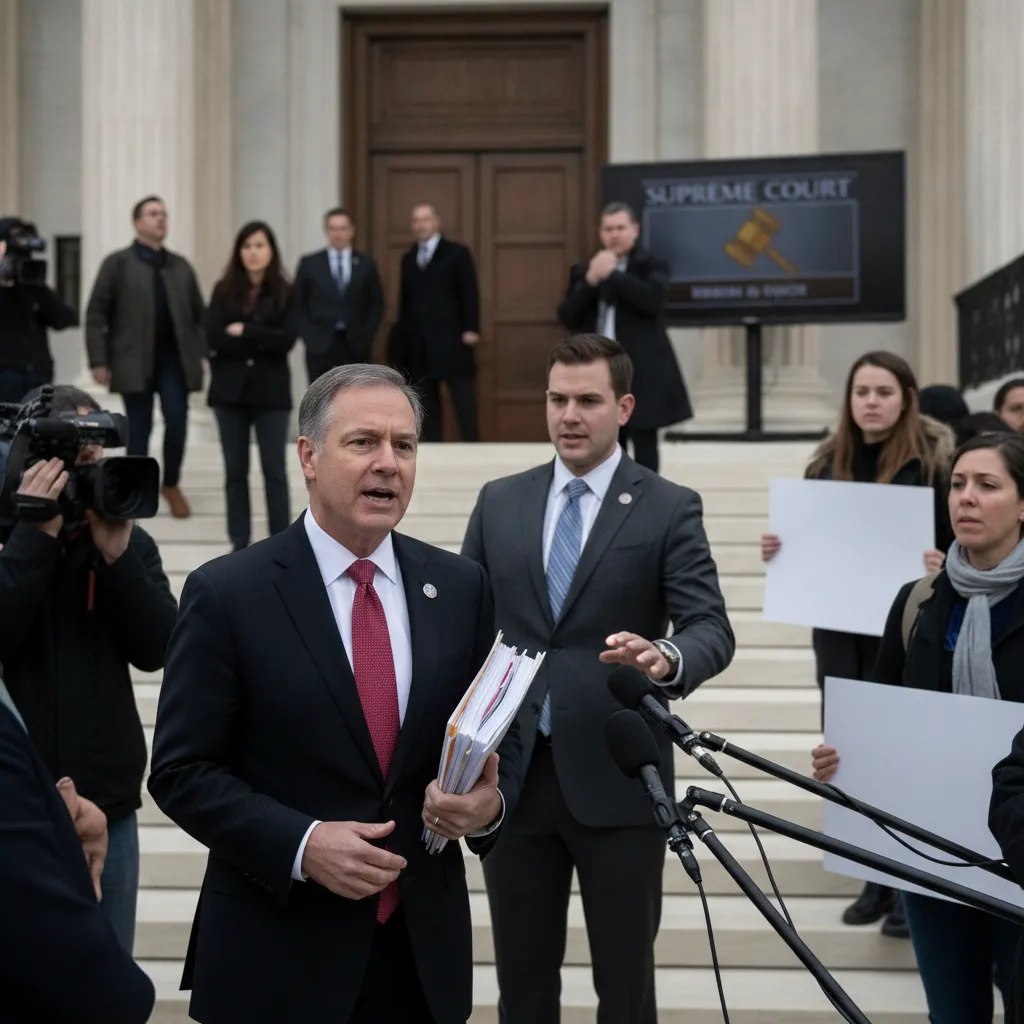
The United States Supreme Court has once again intervened in a brewing battle over campaign finance, siding with Republicans in a dispute regarding discounted television and radio advertising rates. By granting a stay requested by the Federal Communications Commission, the court effectively removed a strict deadline that would have forced the agency to resolve a Democratic legal challenge before the November 3 midterm elections. This move allows the FCC, which is led by Trump ally Brendan Carr, to maintain a policy that extends low cost ad rates to party committees rather than limiting them strictly to individual candidates.
The decision highlights a deepening divide both within the judiciary and across the political spectrum. While the conservative majority favored the stay, liberal justices Sonia Sotomayor and Ketanji Brown Jackson signaled they disagreed with the move. The conflict stems from what Democrats describe as blatant procedural stalling by the FCC. A lower court had previously grown impatient with these delays, accusing the agency of using tactic maneuvers to avoid a ruling while the clock ran out on the current election cycle.
For Republican strategists, this victory ensures that their financial advantages remain intact during a critical stretch of campaigning. Recent filings show that national GOP committees have significantly outperformed their Democratic rivals in fundraising and spending since previous coordination limits were struck down earlier this summer. With hundreds of millions of dollars in cash reserves, Republicans are now positioned to leverage these cheaper airtime rates to saturate markets leading up to Election Day.
An FCC spokesperson defended the action, stating that avoiding a sudden change in rules mid election prevents chaos for broadcasters and campaigns alike. However, Democratic candidates continue to argue that the policy is fundamentally unlawful and designed specifically to give one side an unfair edge. For now, those arguments will likely remain unheard until well after voters have headed to the polls, leaving the status quo firmly in place for the final push toward November.